
The short answer
Call for AC repair if your system blows warm air, short-cycles, makes new noises, leaks water, or drives up your electric bill. A technician tests the whole system to find the actual cause, then explains your repair and replacement options so you can decide with full information.
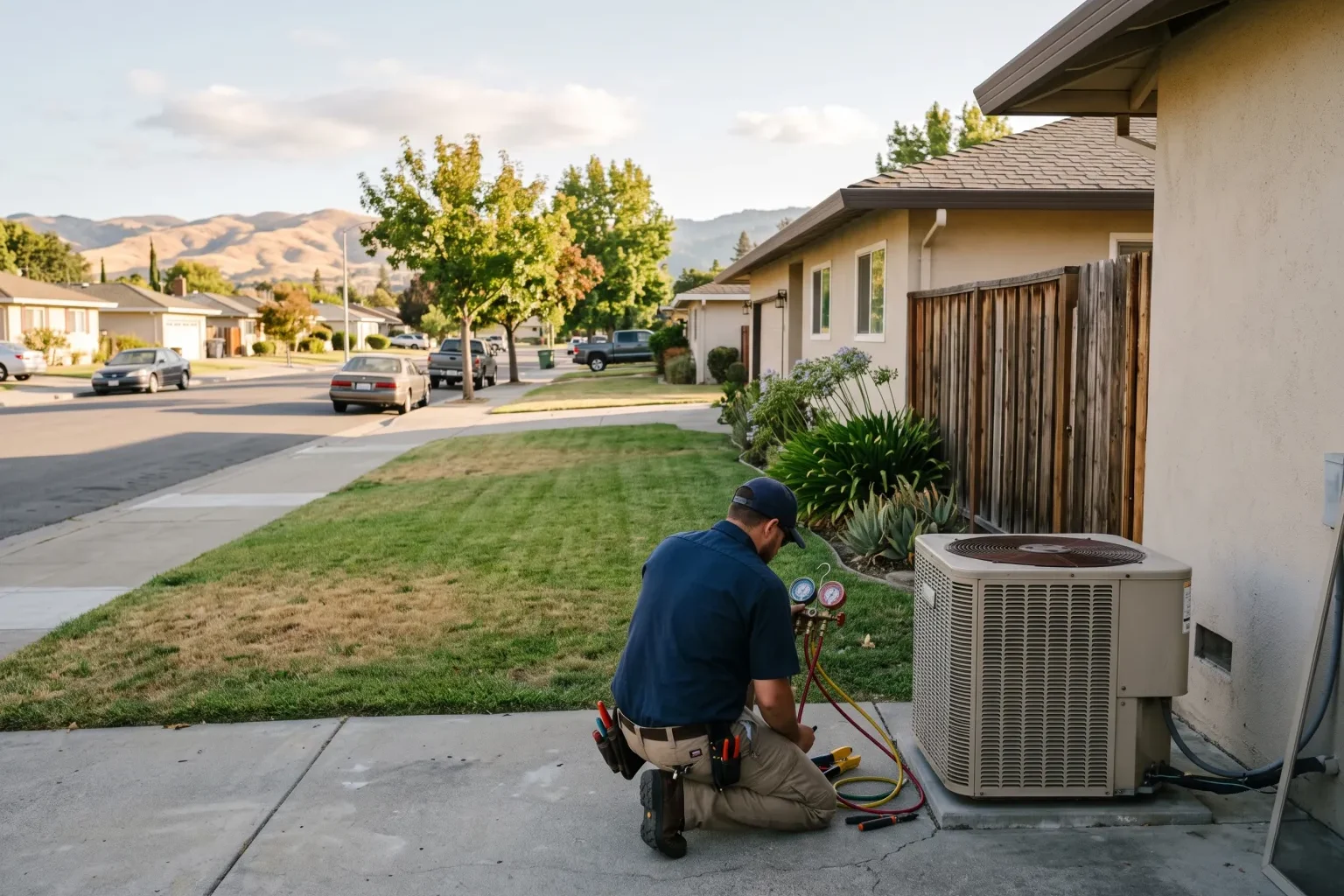
When your air conditioner stops keeping up, you want a clear answer about what's wrong and what it will take to fix it. CoolVantage AC Repair helps homeowners in San Jose and nearby South Bay cities diagnose and repair central air conditioners and heat pumps. Summers in the Santa Clara Valley are dry, and inland and southern parts of the valley run noticeably hotter than neighborhoods near the Bay. That puts real strain on cooling equipment, often during the stretch of the year when you need it most. This page covers the warning signs to watch for, what our technicians check, how we think about repairing versus replacing, what affects the cost, and what to expect during a visit.
Signs Your Air Conditioner Needs Repair
Most AC problems give some warning before the system quits completely. Catching them early often means a simpler repair and less wear on the compressor, which is the most expensive part of the system. If you notice any of the following, schedule a diagnostic visit rather than waiting for a full breakdown.
- Air from the vents feels warm or only slightly cool, even with the thermostat set low.
- The system turns on and off every few minutes (short-cycling) or runs constantly without reaching the set temperature.
- Weak airflow from some or all vents.
- New sounds such as grinding, squealing, rattling, buzzing, or repeated clicking at startup.
- Water pooling near the indoor unit, or a ceiling stain below an attic air handler.
- Ice on the refrigerant lines or the outdoor coil.
- A burning, musty, or electrical smell when the system runs.
- The outdoor unit hums but the fan doesn't spin.
- Electric bills climbing without a change in how you use the system.
- Some rooms staying much warmer than others when they used to stay comfortable.
What We Check During an AC Repair Visit
A good repair starts with finding the real cause, not just the most obvious symptom. A system low on refrigerant, for example, usually has a leak somewhere. Adding refrigerant without finding that leak only delays the next service call. Our technicians work through the system in a consistent order so nothing gets skipped.
After testing, we explain what we found in plain language. We show you the failed or worn part when we can, and we let you know about any other issues that could cause trouble soon.
- Thermostat settings, wiring, and batteries, and whether the thermostat is reading the room correctly.
- Air filter condition and return airflow.
- Electrical components, including capacitors, contactors, relays, and wiring connections.
- Outdoor condenser coil, fan motor, and fan blade.
- Compressor operation and amperage draw.
- Refrigerant pressures and temperatures, plus signs of leaks at coils, fittings, and line sets.
- Indoor evaporator coil, blower motor, and blower wheel.
- Condensate drain line, drain pan, and any float or safety switch.
- Accessible ductwork for disconnected sections or obvious leaks.
- Breakers, disconnect switch, and safety controls.
Repair or Replace: Weighing Your Options
Many AC problems are straightforward repairs. A failed capacitor, a clogged drain line, a worn contactor, or a bad fan motor can often be fixed in a single visit, and the system can keep running well for years afterward. When a repair makes sense, we'll say so.
Replacement deserves a closer look when the system is older, needs a major component such as a compressor or evaporator coil, has repeated breakdowns, or uses a refrigerant that is getting harder and more costly to service. Rooms that never cool evenly can also point to a system that was undersized or poorly matched to the home. We'll give you an honest picture of both paths, including the trade-offs, and leave the decision to you.
If you're considering replacement, it helps to think about heating too. Under Bay Area Air District rules, natural gas furnaces manufactured from 2029 must meet a zero-NOx emission standard. In practice, that points homeowners toward heat pumps when a furnace is replaced after that date. These rules don't require you to replace working equipment, though. They apply only when a furnace fails or is replaced. For some households, replacing an aging AC with a heat pump that handles both cooling and heating is a practical way to plan ahead.
On incentives: the federal 25C tax credit for heat pumps covered systems placed in service before December 31, 2025, and it isn't available for new installations after that date. Bay Area homeowners can still check BayREN and their local clean energy provider for current heat pump and electrification incentives. Amounts and availability change by funding cycle, so we confirm the current offer before including it in any quote.
What Affects the Cost of AC Repair
We can't quote a repair until we know what's wrong. Several factors shape what a repair will cost, and we explain them before any work begins so there are no surprises.
- The part that failed. Small electrical parts usually cost far less than a compressor, coil, or blower motor.
- Refrigerant type and amount. Older refrigerants can be more expensive and harder to source.
- Leak location. A leak at an accessible fitting is simpler to fix than one inside a coil.
- Access. Units in tight attics, crawlspaces, or on rooftops take more time to reach and work on.
- System age and brand, which affect parts availability.
- Whether additional problems turn up during testing, such as a clogged drain combined with a weak capacitor.
- Timing, since some parts may need to be ordered rather than pulled from stock.
How an AC Repair Visit Works
When you contact us, we ask a few questions about what you're noticing, what type of system you have, and where the equipment is located. This helps the technician arrive prepared. It also helps to have the area around your indoor and outdoor units clear, and to know where your electrical panel is.
On arrival, the technician talks with you about the symptoms, then inspects and tests the system as described above. Once the cause is clear, they explain what's wrong, walk you through your options, and give you the cost before starting any repair. Nothing proceeds without your approval.
If the needed part is on the truck, the repair can often be completed during the same visit. If a part has to be ordered, we'll explain the next steps and schedule a return trip. After the repair, the technician runs the system, checks that it's cooling properly, and shares any maintenance tips that could help prevent the same problem from coming back.
AC Repair by city
- AC Repair in Los GatosLocal service & repairs
- AC Repair in CampbellLocal service & repairs
- AC Repair in Monte SerenoLocal service & repairs
- AC Repair in Morgan HillLocal service & repairs
- AC Repair in SaratogaLocal service & repairs
- AC Repair in Santa ClaraLocal service & repairs
- AC Repair in MilpitasLocal service & repairs
- AC Repair in CupertinoLocal service & repairs
- AC Repair in SunnyvaleLocal service & repairs
- AC Repair in Scotts ValleyLocal service & repairs
- AC Repair in Los AltosLocal service & repairs
- AC Repair in Mountain ViewLocal service & repairs