
The short answer
You likely need a new furnace if repairs are frequent, heating is uneven, bills keep rising, or a technician finds a cracked heat exchanger. We inspect the furnace, ducts, venting, and gas and electrical connections before recommending a repair, a new furnace, or a heat pump, and we quote only after seeing your home.
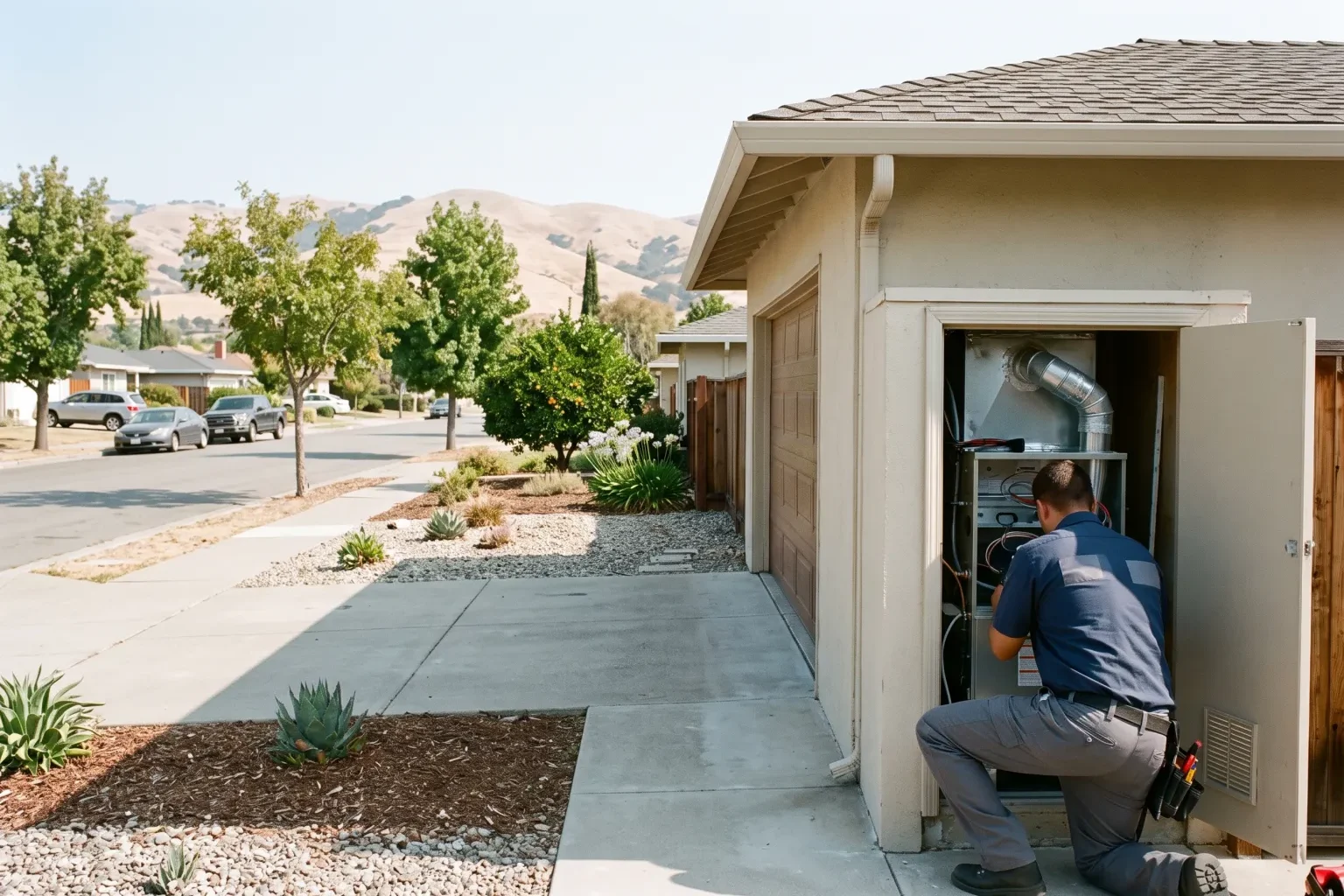
A furnace in San Jose doesn't run as hard as one in a cold-winter state, but it still has real work to do on damp winter nights and chilly mornings. When an old furnace starts failing, you have more choices than you might expect: repair it, replace it with a new gas furnace, or switch to a heat pump that heats and cools. CoolVantage AC Repair installs replacement furnaces for homeowners in San Jose and nearby cities. We help you choose the option that fits your house, your budget, and the local rules that affect gas equipment.
Signs You May Need a New Furnace
Most furnaces give warning before they quit. Because South Bay winters are mild, a struggling furnace can limp along for years with problems that are easy to ignore. These signs are worth taking seriously:
One sign alone doesn't always mean replacement. An older furnace with a single failed part may be worth fixing. A furnace showing several of these symptoms usually isn't.
- Repairs are becoming routine, and the same parts keep failing.
- Some rooms stay cold while others get too warm, even after you've changed the filter and opened the vents.
- The burner flame looks yellow or flickers instead of burning a steady blue.
- You hear banging, rattling, or screeching when the system starts or runs.
- Heating bills creep up even though you haven't changed how you use the thermostat.
- The house feels dusty or stuffy when the heat runs, or someone gets headaches or nausea while it's on. If you suspect carbon monoxide, leave the home and call your gas utility or 911 before calling us.
- A technician has found a cracked heat exchanger, which almost always means replacement.
What We Check Before Recommending a New Furnace
We don't size a new furnace by copying the label on the old one. Many homes have equipment that was the wrong size from the start. Others have changed since the furnace went in, with new windows, added insulation, or an addition. Before we quote anything, our technician looks at:
With this information, we can estimate how much heat your home actually needs and explain what we found in plain terms, including anything that should be fixed whether or not you replace the furnace.
- The heat exchanger, burners, ignition system, blower, and controls on your current furnace
- Ductwork condition and leaks, and whether the return and supply runs can handle the airflow a new unit needs
- Venting and flue routing, and whether a high-efficiency furnace would need new vent piping and a condensate drain
- Gas line size, the shutoff valve, and the electrical supply at the furnace location
- Where the furnace sits (attic, garage, closet, or crawlspace) and how much working room there is
- Insulation, windows, and layout, since these drive how much heat the house loses
- Your thermostat and whether it will work with new equipment
Repair, Replace, or Switch to a Heat Pump
Repair usually makes sense when the furnace is in good overall shape and the problem is a single part, such as an igniter, flame sensor, or blower motor. If the heat exchanger is cracked, repairs are stacking up, or the furnace can't keep the house comfortable, replacement is usually the better use of your money.
If you replace, you can choose a standard-efficiency furnace or a high-efficiency condensing model. A high-efficiency furnace wastes less fuel but often needs new venting and a drain line. Two-stage and variable-speed models run more quietly and evenly than single-stage units.
A heat pump is worth a serious look in the Santa Clara Valley. Our mild, damp winters suit heat pumps well, and inland and southern parts of the valley get hot enough in summer that the cooling side gets real use. Local rules also matter. Under Bay Area Air District Rule 9-4, natural gas furnaces manufactured from 2029 on must meet a zero-NOx emission standard, which in practice points homeowners toward heat pumps when they replace a furnace after that date. The rules don't force you to replace working equipment. They apply only when a furnace fails or is replaced.
On incentives: the federal Energy Efficient Home Improvement Credit (25C) covered qualifying heat pumps placed in service before December 31, 2025, and it isn't available for new installations after that date. BayREN and your local clean energy provider may offer heat pump and electrification incentives, but amounts and availability change with each funding cycle. We confirm the current offer before including it in a quote.
What Affects the Cost of Furnace Installation
We quote each installation after seeing the home, because the same furnace can be a simple swap in one house and a larger project in another. The main factors are:
Your written quote lists what's included so you can compare options side by side.
- Equipment type: standard furnace, high-efficiency furnace, or heat pump
- The capacity your home needs
- Single-stage, two-stage, or variable-speed operation
- How easy the installation location is to reach, especially attics and tight closets
- Duct repairs, sealing, or changes needed for proper airflow
- Venting changes, such as new piping for a condensing furnace
- Gas line or electrical updates
- Permits and inspections, where your city requires them
- Add-ons such as a new thermostat or upgraded air filtration
How a Furnace Installation Visit Works
First, a technician visits to inspect your current system and home, asks how the heat has been working for you, and walks through the repair, replacement, and heat pump options that fit. You get a written quote and time to decide without pressure.
On installation day, the crew protects floors and work areas, shuts off gas and power, and removes the old furnace. They set the new unit, connect gas, venting, electrical, and ductwork, and install or connect the thermostat.
Before leaving, we start the system and test it. That includes checking for gas leaks, verifying safe venting, measuring airflow and temperatures, and making sure the thermostat controls the furnace correctly. We haul away the old equipment, show you how to change the filter and use the thermostat, and schedule any required inspection.