
The short answer
Most San Jose homes benefit from HVAC maintenance once a year for cooling and once a year for heating, ideally in spring and fall. A visit includes a hands-on inspection, cleaning, and performance check of your equipment, followed by a plain-language review of what we found. You approve any repairs before we do them.
Heating and cooling equipment in San Jose works through two very different seasons. Long, dry summers push air conditioners hard, especially in the inland and southern parts of the valley, which run noticeably hotter than areas near the Bay. Mild, damp winters keep a furnace or heat pump cycling on cool mornings and evenings. Regular maintenance helps your system handle both. CoolVantage AC Repair services air conditioners, furnaces, heat pumps, and ductless systems for homeowners in San Jose and nearby cities. This page covers when to schedule a tune-up, what our technicians check, how to think about repair versus replacement, and what to expect during a visit.
Signs Your System Needs Maintenance
Many homeowners book a cooling tune-up before summer and a heating tune-up before winter. Beyond that routine, these signs suggest your system needs attention sooner:
None of these automatically means a major problem. Often the cause is a clogged filter, a dirty coil, or a blocked condensate drain. Catching it during a maintenance visit is usually simpler than waiting for the system to quit on the hottest afternoon of the year.
- Rooms that are noticeably warmer or cooler than the rest of the house
- Weak airflow from vents, even with the fan on high
- The system turning on and off in short, frequent cycles
- Energy bills that climb without a change in how you use the system
- New noises such as rattling, squealing, grinding, or banging
- Musty, burning, or unusual odors when the system starts
- Ice on the outdoor unit or refrigerant lines
- Water pooling near the indoor unit or furnace
- More dust settling around the house than usual
What We Check During a Maintenance Visit
A maintenance visit is a hands-on inspection and cleaning, not a quick glance. The exact checklist depends on whether you have a central air conditioner, gas furnace, heat pump, or ductless mini-split. A typical visit covers:
When we finish, we explain what we found in plain terms, including parts that are working now but showing early wear.
- Air filter condition and size, with replacement if you request it
- Thermostat settings, calibration, and wiring
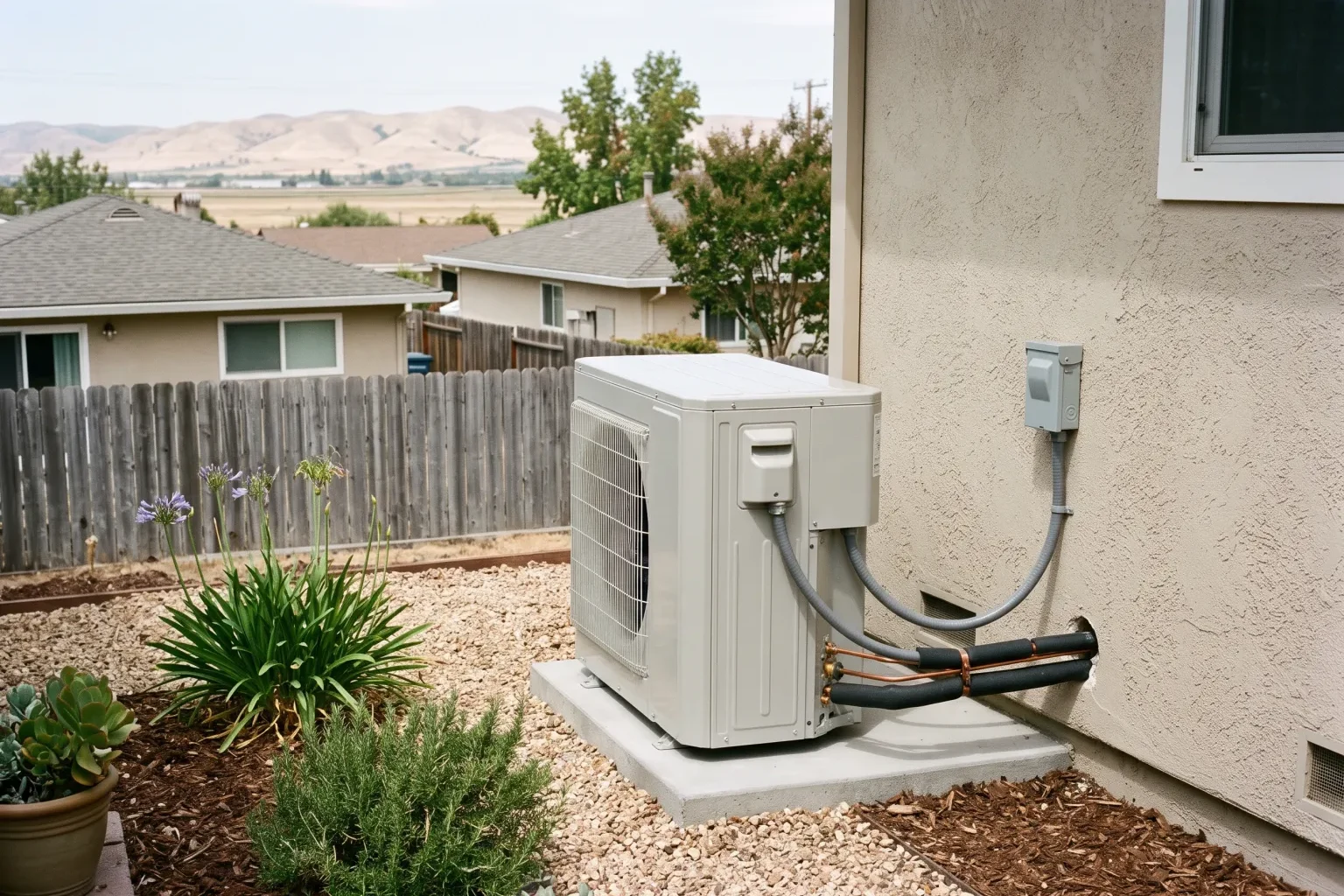
- Outdoor condenser coil cleaning, plus clearing leaves, debris, and plant growth around the unit
- Indoor evaporator coil and blower inspection
- Refrigerant pressures and temperature readings to confirm the system is cooling as designed
- Electrical connections, capacitors, and contactors for wear or heat damage
- Condensate drain line and pan, cleared to help prevent leaks and water damage
- Furnace burners, flame sensor, ignition, and heat exchanger inspection
- Venting and flue checks on gas equipment, plus a carbon monoxide check
- Heat pump reversing valve and defrost operation
- Motors, belts, and moving parts adjusted or lubricated where applicable
- Visible ductwork for disconnected sections or obvious leaks
Repair or Replace: What Maintenance Can Tell You
Sometimes a maintenance visit turns up a part that needs attention. Many issues, like a failing capacitor, a worn igniter, or a clogged drain, are straightforward repairs that keep a system running well. We'll tell you what needs fixing now and what can wait.
When equipment is older, needs frequent repairs, or has a major failure such as a bad compressor or cracked heat exchanger, replacement may make more sense. We lay out both options so you can weigh the cost of continued repairs against a new system.
Bay Area air quality rules can be part of that decision. The Bay Area Air District does not require anyone to replace working equipment; its appliance rules apply only when an existing furnace or water heater fails or is replaced. Under those rules, natural gas furnaces manufactured from 2029 must meet a zero-NOx emission standard, which in practice points homeowners toward heat pumps when replacing a furnace after that date. For small water heaters, the zero-NOx date was set for 2027, but the Air District Board is considering amendments in November 2026 that could delay it, so check the current rule before planning a water heater replacement.
On incentives: the federal Energy Efficient Home Improvement Credit covered qualifying heat pumps placed in service before December 31, 2025, and it is not available for new installations after that date. Bay Area homeowners can check BayREN and their local clean energy provider for current heat pump and electrification incentives. Those programs change by funding cycle, so we confirm the current offer before including it in any quote.
What Affects the Cost of HVAC Maintenance
We give you a clear quote before work begins. The cost of a maintenance visit depends on several factors:
If we find something that needs repair, we explain it and give you the price before doing the work. You decide what to approve.
- The type and number of systems, such as a single furnace and AC versus a multi-zone setup or a ductless system with several indoor units
- Equipment age and condition, since heavily soiled coils or long-neglected systems take more time to clean
- Access to equipment in tight attics, crawl spaces, or rooftops
- Parts or materials used, such as filters, capacitors, or refrigerant
- Whether you schedule heating and cooling maintenance together or separately
- Any repairs you approve after the inspection
How a Maintenance Visit Works
Scheduling: Contact us to book a time that works for you. Spring is a good window for air conditioning maintenance before summer heat arrives, and fall works well for furnaces and heat pumps before the damp winter months.
Arrival and questions: Your technician starts by asking how the system has been running and whether you've noticed any of the warning signs listed above. Your observations help us focus on the right areas.
Inspection and cleaning: We work through the checklist on your indoor and outdoor equipment. Time on site depends on the number of systems, their condition, and how easy they are to reach.
Review: We walk you through what we found, recommend any repairs, and answer your questions. Nothing beyond the agreed maintenance happens without your approval.
Afterward: We note your filter size and suggest how often to check and change it based on your household, including pets and allergies.