
The short answer
You need duct cleaning when there's real contamination, such as construction debris, pest residue, mold, or heavy dust blowing from the vents. A normal layer of dust isn't a reason. We inspect first, then recommend cleaning, repair and sealing, or replacement based on what the ducts actually need.
Most homes in San Jose don't need their ducts cleaned on a schedule. They need it when something specific has happened: a remodel pushed drywall dust into the system, pests got in, mold appeared, or vents keep coating rooms in dust no matter how often you change the filter. Our job is to figure out which situation you're in before we recommend anything. CoolVantage AC Repair inspects duct systems across San Jose and nearby cities. We clean them when cleaning will actually help, and we repair or replace sections when the real problem is damage, leaks, or poor design. This page explains how we decide and what a visit looks like.
Signs Your Ducts Need Attention
The Santa Clara Valley has long, dry summers, and fine dust works its way into homes, especially older houses with leaky return ducts. Some dust inside ducts is normal and harmless. These signs point to a real problem:
Some of these signs, like weak airflow or filters that clog quickly, often have causes other than dirty ducts. Common culprits include a crushed flex line, a run that has come loose in the attic, or a return duct pulling air from a crawlspace. That's why we inspect before we clean.
- Dust puffs out of the supply vents when the system starts, or dust settles on furniture within a day or two of cleaning
- Remodeling, sanding, or drywall work happened while the system was running or without the vents sealed off
- There are signs of rodents or insects, such as droppings, nesting material, or a stale odor near the registers
- Mold is growing on duct surfaces, the blower, or the coil, not just on the outside of a vent cover
- A musty or burnt smell starts when the heat or air conditioning turns on
- Filters clog much faster than they used to
- Airflow is uneven, and some rooms get noticeably less air than others
What We Check During a Duct Inspection
A useful duct inspection looks at the whole path the air travels, not just the inside of a few vents. On a typical visit we check:
We'll show you photos or camera footage of what we find, so you can see the condition of your ducts for yourself.
- Supply and return registers, grilles, and the first few feet of each run, using a camera where we can't see directly
- The return plenum and filter rack, including whether the filter fits and seals properly
- The blower compartment and evaporator coil, since a dirty blower or coil can push debris right back into clean ducts
- Duct connections in the attic, crawlspace, or garage, looking for gaps, loose tape, and disconnected joints
- Flexible duct, looking for kinks, sags, crushed sections, and torn outer jackets or insulation
- Evidence of moisture, condensation, or pest entry
- Airflow at each register, to spot rooms that aren't getting enough air
Clean, Repair, or Replace: Choosing the Right Fix
Cleaning only makes sense when the ductwork itself is in reasonable shape. If it isn't, cleaning just removes dirt from a system that will keep leaking or pulling in more. Here's how the options usually break down:
If you plan to replace your furnace or AC in the next few years, factor that into your duct decision. Under Bay Area Air District rules, natural gas furnaces made from 2029 on must meet a zero-NOx emission standard, which points many homeowners toward heat pumps. The rules don't require you to replace working equipment. They apply only when a furnace fails or is replaced. Still, if a heat pump is likely in your future, it may make sense to fix or resize your ducts at the same time. You can also ask us about current heat pump incentives from BayREN and your local clean energy provider. Amounts and availability change, so we confirm the current offer before discussing it.
- Cleaning: Best for sound ductwork with real contamination, such as construction debris, pest residue, or heavy buildup. We put the system under negative pressure with vacuum equipment, then use brushes or air tools to loosen debris and pull it out of the ducts instead of into your rooms.
- Repair and sealing: Best when ducts are mostly intact but have leaks, loose connections, or a few damaged sections. We reconnect and fasten joints, seal seams with mastic or approved tape, and replace short damaged runs.
- Partial replacement: Common when older flex duct in the attic has become brittle, crushed, or chewed by rodents, or when a few runs are too small for the rooms they serve.
- Full replacement: Worth considering when most of the system is deteriorated, contaminated beyond reasonable cleaning, or poorly designed. It's also a good time to address insulation and layout.
What Affects the Cost of Duct Cleaning
We give a written quote after the inspection, because the price depends on what we find. The main factors are:
We'll explain each line on the quote and tell you which items are necessary and which are optional.
- The size of the home and the number of supply and return vents
- How easy the ducts are to reach, whether they run through a roomy attic, a tight crawlspace, or between floors
- The type of contamination, since construction dust, pest debris, and mold each need different handling
- The duct material, because flex duct needs gentler cleaning than sheet metal
- Whether the blower, coil, or other equipment also needs cleaning
- Any repairs, sealing, or replacement sections added to the job
- The number of HVAC systems in the home
How a Duct Cleaning Visit Works
We start by asking what prompted your call and what you've noticed. Then we do the inspection described above. Before any cleaning, we go over our findings, show you the photos, and give you options with a quote. Nothing happens until you approve it.
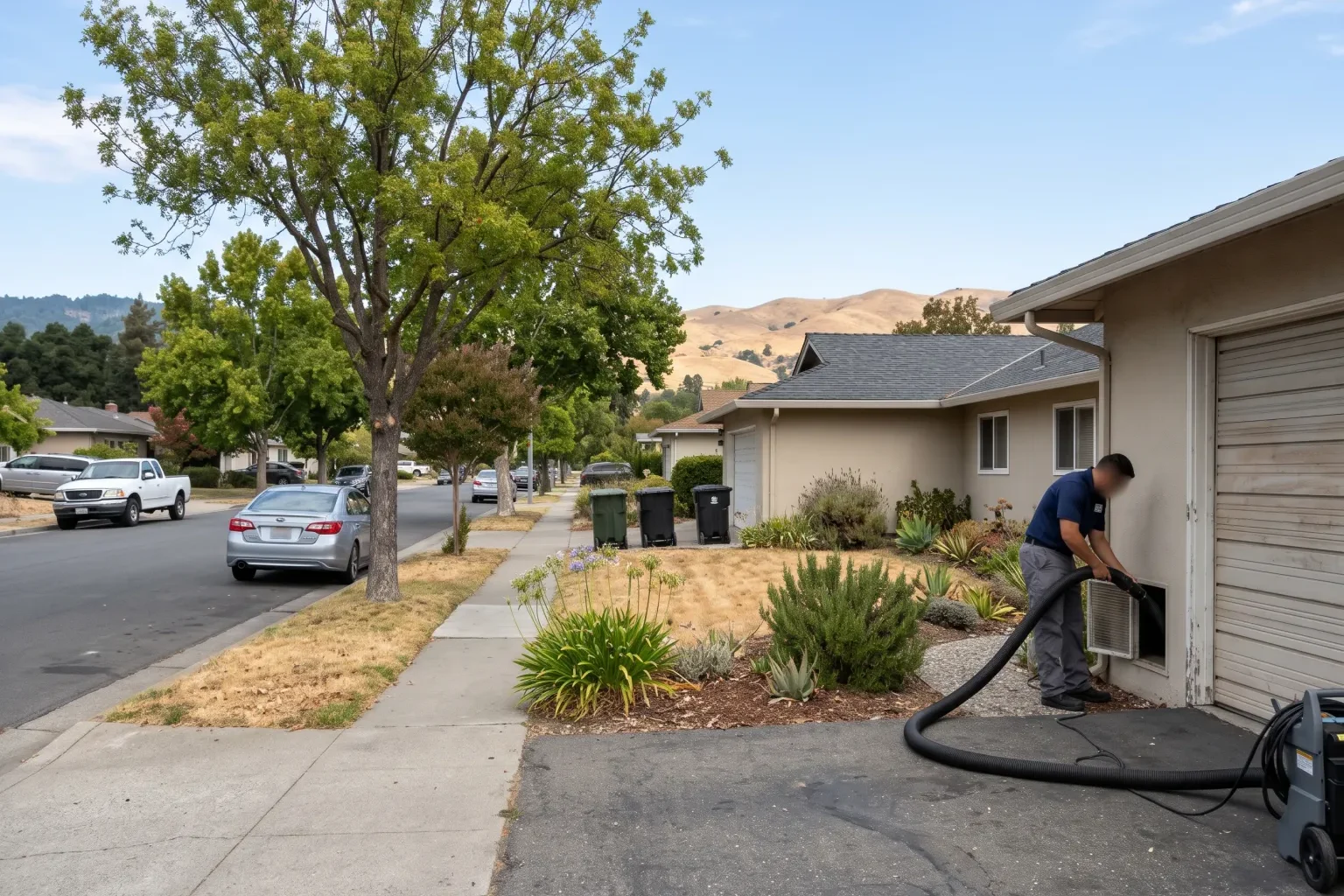
On cleaning day, we protect floors and furniture near the work area and cover the registers. Then we connect a vacuum unit to keep the system under negative pressure. We work through each supply and return run, clean the registers and grilles, and clean the blower and coil if they're part of the job. If we find something unexpected, such as a disconnected run, we stop and talk with you before doing any extra work.
When we're done, we run the system, check airflow at the registers, install a new filter if you'd like, and walk you through what we did. We'll also suggest simple steps to help keep your ducts clean longer, like choosing the right filter and changing it on time.