
The short answer
If your AC in Scotts Valley isn't cooling, start with the thermostat, the breaker, and the air filter. If those look fine, a technician should check the outdoor unit, capacitor, refrigerant circuit, and condensate drain. CoolVantage AC Repair travels from San Jose to diagnose and repair central AC and heat pump systems in Scotts Valley homes.
Many Scotts Valley homes don't run their air conditioning every day. The system may sit quiet through damp months, then get switched on during a warm spell and fail to cool. CoolVantage AC Repair comes over from San Jose, about 17 miles away, to diagnose central air conditioners and heat pumps in Scotts Valley homes. We find out why the system stopped cooling, explain what we found in plain terms, and fix it when a repair makes sense. This page covers the AC problems we tend to look for in Scotts Valley, what you can safely check before you call, and how a repair visit works.
AC Problems We Often Look For in Scotts Valley Homes
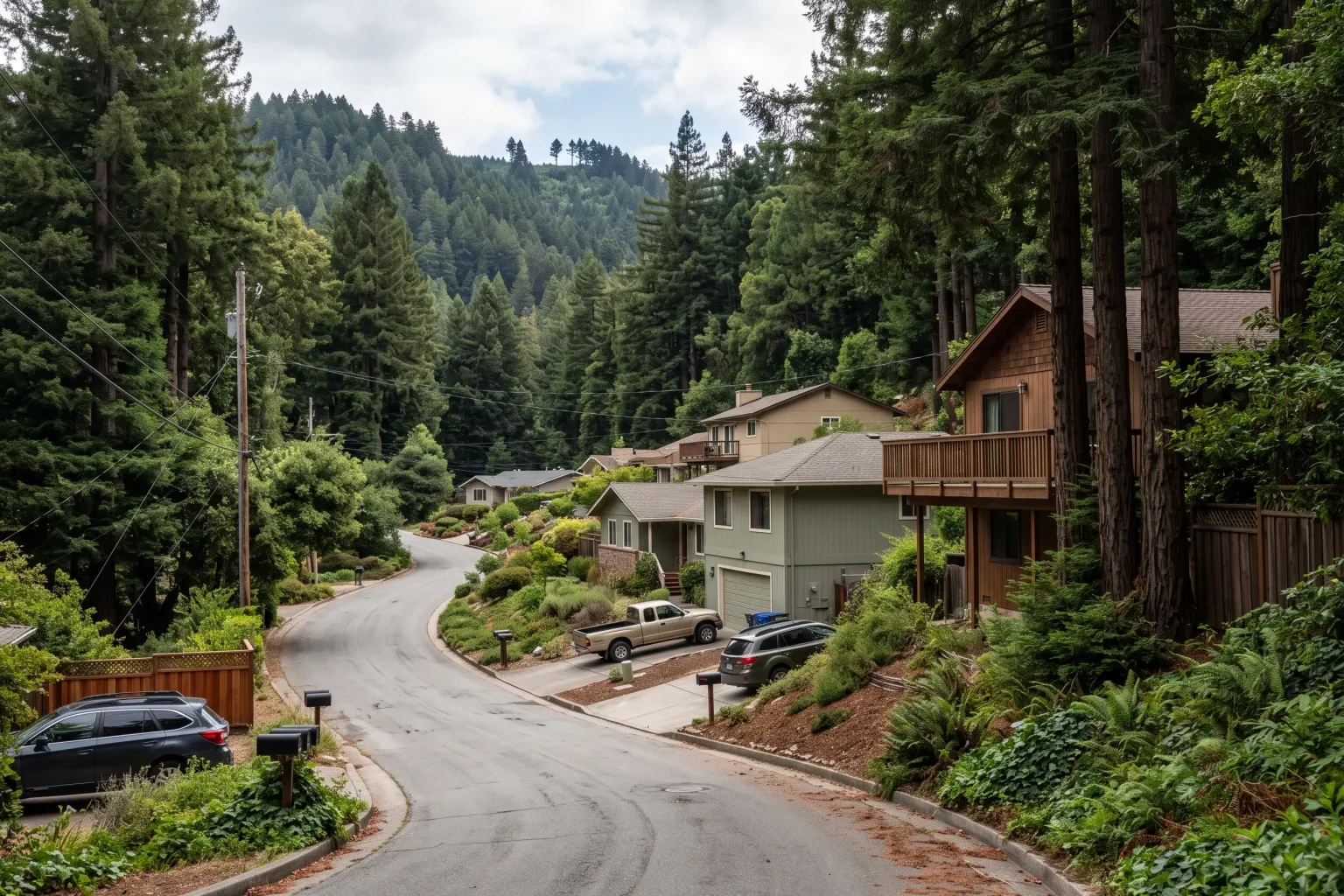
Scotts Valley sits in the Santa Cruz Mountains, and many homes are surrounded by trees and slopes. That setting affects air conditioners in a few predictable ways. Leaves, needles, and seed pods can pack into the fins of an outdoor condenser and choke off airflow. A unit with poor airflow runs hot, works harder, and may shut itself off on a safety limit.
Long idle stretches cause their own problems. A system that hasn't run in months can show weaknesses all at once on the first warm day. A capacitor may have weakened over the off-season. A contactor may be pitted. Or small animals or insects may have nested in the outdoor cabinet.
We commonly trace no-cooling or poor-cooling calls to these causes:
- A failed start or run capacitor, so the outdoor fan or compressor hums but won't start
- A dirty or blocked condenser coil that keeps the system from shedding heat
- A clogged condensate drain that trips a float switch and shuts the system down
- A frozen indoor coil caused by a dirty filter, weak blower, or low refrigerant
- Refrigerant leaks at coils, valves, or line set connections
- Damaged low-voltage wiring between the thermostat, air handler, and outdoor unit
What to Check Before You Schedule a Repair
A few quick checks can save you a visit or help us find the problem faster. Make sure the thermostat is set to cool, the set point is below room temperature, and the batteries are good if it uses them. Look at your electrical panel for a tripped breaker for the air handler or outdoor unit, and check the outdoor disconnect switch near the condenser.
Next, pull the air filter. A filter caked with dust can restrict airflow enough to freeze the indoor coil. If you see ice on the refrigerant lines or the indoor unit, turn cooling off and let the fan run so the ice melts before anyone works on it. Don't open electrical panels on the equipment or try to add refrigerant yourself. Capacitors can hold a dangerous charge even with the power off.
How a Repair Visit Works
When we arrive, we ask what you've noticed: strange noises, short cycling, warm air, water around the indoor unit, or a system that won't turn on at all. Then we test the equipment rather than guess. That usually means checking voltage and capacitor readings, inspecting the contactor and wiring, measuring temperatures across the indoor coil, checking refrigerant pressures, and looking at the drain line and blower.
Once we know the cause, we explain it and walk you through your options before doing any work. Many problems, like a failed capacitor, a blocked drain, or a dirty condenser coil, can often be fixed in a single visit. Some parts may need to be ordered, and we'll tell you if that's the case.
Repair or Replace?
Most cooling problems are worth repairing. We raise replacement only when it may be the better choice, such as a failed compressor in an older system, a repeated refrigerant leak in a worn coil, or equipment that can't keep up with the house. If you're weighing a heat pump as a replacement, note that the federal Energy Efficient Home Improvement Credit only covered qualifying heat pumps placed in service before December 31, 2025, so it doesn't apply to new installations now. Local incentive programs change by funding cycle, so we confirm what's currently available before including anything in a quote.
Serving Scotts Valley and Nearby Communities
Scotts Valley is in Santa Cruz County, over the hill from our San Jose base. We also handle AC repair in Los Gatos, Monte Sereno, Saratoga, Campbell, and Cupertino. When you call, it helps to share the make of your system, roughly how old it is, and what it's doing, so we arrive prepared.
More services in Scotts Valley
- Heating Repair in Scotts ValleyLocal service & repairs
- Heat Pump Installation in Scotts ValleyLocal service & repairs
- AC Installation in Scotts ValleyLocal service & repairs
- Furnace Repair in Scotts ValleyLocal service & repairs