
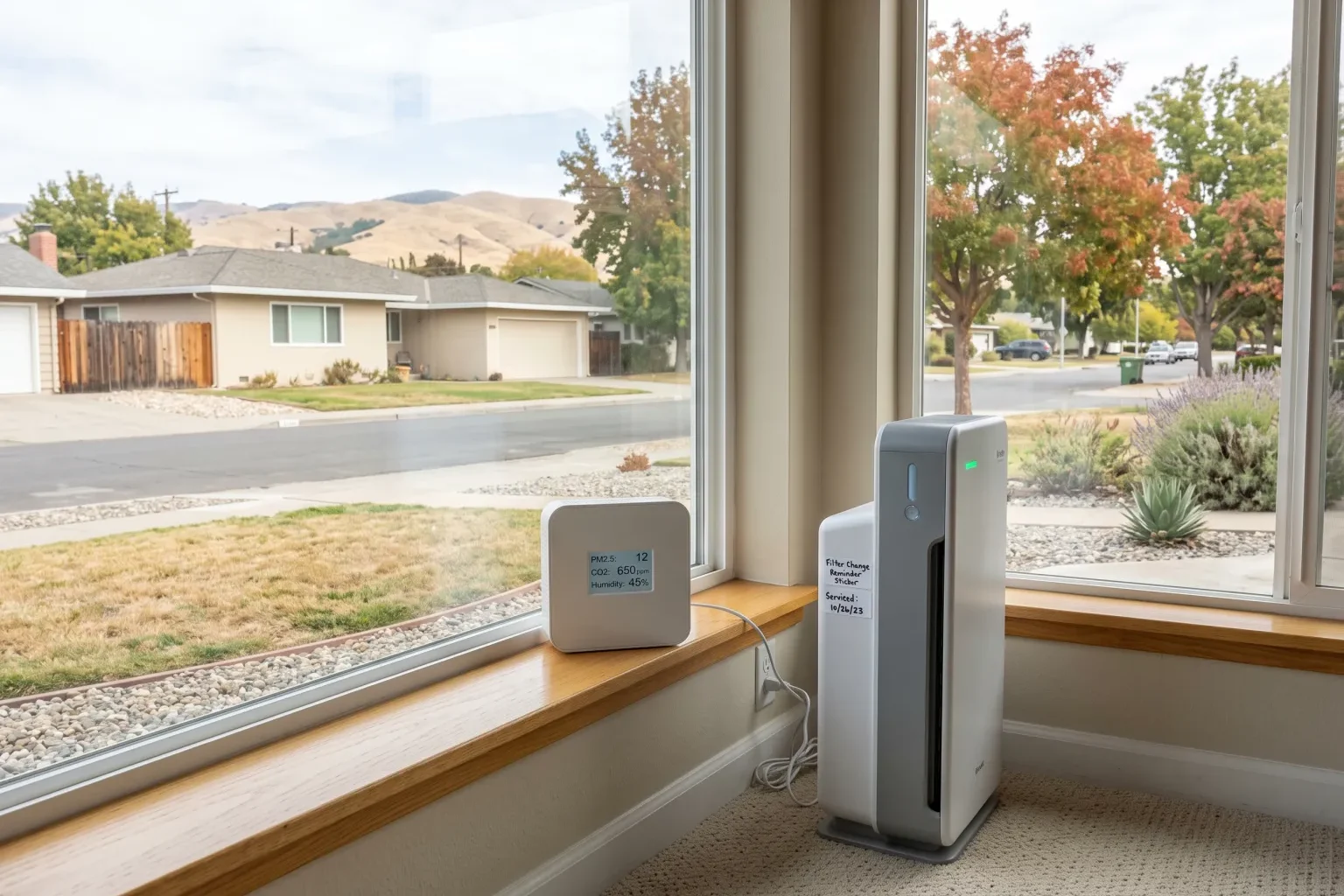
The short answer
Indoor air quality service looks at how your HVAC system filters, ventilates, and controls moisture, then fixes the weak points. Many problems are solved with filter upgrades, duct sealing, or cleaning. Others call for added equipment such as an air cleaner or ventilation system.
Your heating and cooling system moves every cubic foot of air in your home, many times a day. When filters clog, ducts leak, or humidity drifts out of range, that air can carry dust, odors, and allergens from room to room. CoolVantage AC Repair helps homeowners in San Jose and nearby cities find out what is actually affecting their indoor air and fix it at the source. Sometimes that means a better filter or a sealed duct. Sometimes it means adding equipment such as an air cleaner, a dehumidifier, or a ventilation system. We start by looking, measuring, and explaining what we find, and only then recommend changes.
Signs Your Home Needs an Indoor Air Quality Check
Poor indoor air rarely announces itself with one clear symptom. Usually it shows up as small, nagging problems that do not go away with regular cleaning. The Santa Clara Valley's dry summers and mild, damp winters create two different sets of issues. Summer brings dust and dry air. Winter can bring condensation and musty smells in rooms that stay closed up.
If you notice several of the signs below, it is worth having your system and ductwork looked at.
- Dust settles on furniture within a day or two of cleaning
- Allergy or sinus symptoms that are worse indoors than outside
- Musty, stale, or burning smells when the system turns on
- Condensation on windows or damp spots in winter
- Static shocks, dry skin, or cracked woodwork in summer
- Some rooms feel stuffy while others feel fine
- Visible dirt or debris around supply and return vents
- Filters that look clogged long before they should
- Lingering cooking or pet odors that do not clear out
What We Check During an Indoor Air Quality Visit
An indoor air quality visit is an inspection of your whole air system, not a sales pitch for a single product. We look at how air enters, moves through, and leaves your home, and where contaminants or moisture are getting in.
We use the readings and what we see to explain the likely causes in plain terms. If the system is working well and the issue is something else, such as a bathroom fan that vents into the attic, we will tell you that too.
- Filter type, fit, and condition, including gaps around the filter rack that let air bypass it
- Return and supply ducts for leaks, disconnected sections, crushed runs, and dust buildup
- Indoor coil and blower for dirt, biological growth, and drainage problems
- Condensate drain pan and line for standing water or clogs
- Indoor humidity levels in different parts of the home
- Fresh air and exhaust ventilation, including kitchen and bath fans
- Combustion appliances such as gas furnaces and water heaters for proper venting
- Any existing air cleaners, UV lights, or humidifiers to confirm they are working
Repair, Upgrade, or Replace: Your Options
Most indoor air problems can be improved without replacing your heating and cooling equipment. We usually start with the simplest fixes that address the cause, then discuss added equipment if the basics are not enough.
Common repairs include sealing leaky return ducts so the system stops pulling in attic or crawlspace dust, cleaning a dirty blower or coil, clearing a clogged condensate line, and fixing a filter rack so air cannot slip past the filter.
Upgrades add filtration, ventilation, or moisture control. Options include a deeper media filter cabinet, a whole-home air cleaner, a whole-home dehumidifier or humidifier, UV lights at the coil, and balanced ventilation such as an energy recovery ventilator for tighter homes.
Replacement makes sense when the equipment itself is a source of the problem, for example a furnace with a cracked heat exchanger or a heavily contaminated system near the end of its life. Bay Area Air District rules do not require you to replace working equipment. They apply only when a furnace or water heater fails or is replaced. Gas furnaces manufactured from 2029 must meet a zero-NOx standard, which points many homeowners toward heat pumps for future replacements. If you are weighing that choice, we can walk you through it. We can also point you to BayREN and your local clean energy provider for current incentives, which we confirm before discussing any offer.
What Affects the Cost of Indoor Air Quality Work
Every home is different, so we give you a written estimate after the inspection rather than guessing over the phone. These are the main factors that shape the scope of the work.
- The type of fix: a filter or cleaning job is simpler than adding new equipment
- Size of the home and the number of HVAC systems
- Ductwork condition, length, and how easy it is to reach in attics or crawlspaces
- Whether new electrical, drain, or ventilation connections are needed
- The specific equipment selected and its efficiency or capacity
- Local permit requirements for certain installations
- Ongoing upkeep such as replacement filters, UV bulbs, or media
How a Visit Works
First, we schedule a time that fits your day and ask a few questions about what you are noticing, such as when symptoms are worse and which rooms bother you most.
At the visit, a technician inspects your system and ductwork, takes humidity and airflow readings, and checks ventilation and combustion appliances. This typically takes a couple of hours, depending on the home.
Next, we explain what we found, show you photos where helpful, and lay out your options from simplest to most involved. You get a written estimate, and you decide what, if anything, to do. Many small fixes can be handled the same day. Larger installations are scheduled for a follow-up visit.