
The short answer
A heat pump is a strong fit for most Mountain View homes because the mild, damp winters and dry summers fall well within what modern heat pumps handle efficiently. A good installation starts with a load calculation, a check of your ducts and electrical panel, and a look at current local incentives before you get a quote.
If you're thinking about a heat pump for your Mountain View home, you probably want to know whether it will keep the house comfortable, what the install involves, and how current Bay Area rules affect the decision. CoolVantage AC Repair installs heat pumps for homeowners in Mountain View's 94040, 94041, and 94043 ZIP codes, about 19 miles northwest of our San Jose base. This page covers what matters for homes here: sizing for the local climate, working with existing ductwork or going ductless, electrical readiness, and the rules and incentives that apply in Santa Clara County right now.
Why Heat Pumps Suit Mountain View's Climate
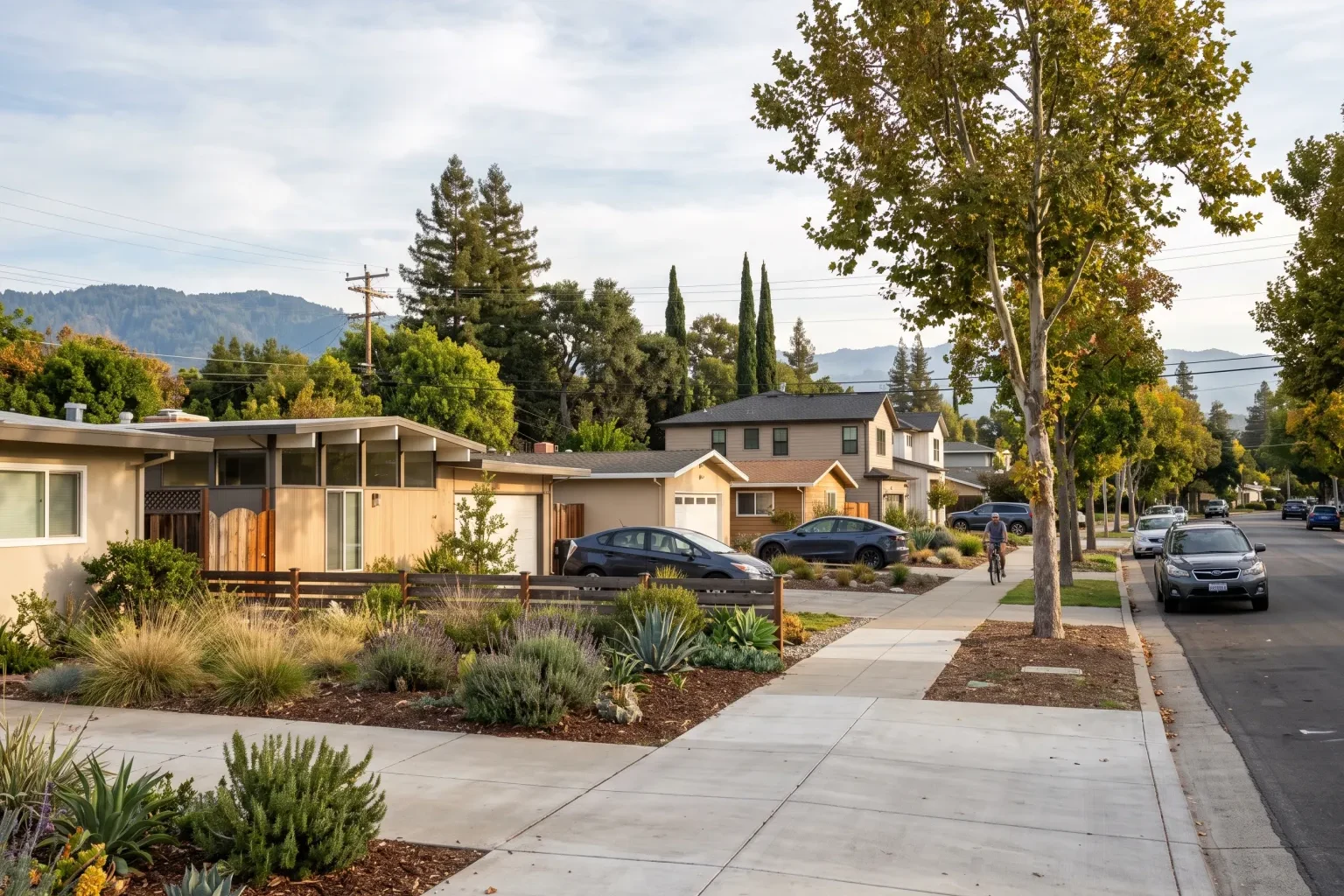
The Santa Clara Valley has a Mediterranean climate: dry summers and mild, damp winters. Mountain View sits closer to the Bay than the inland and southern parts of the valley, which tend to run noticeably hotter in summer. That means many homes here need moderate cooling on warm afternoons and steady, gentle heating on cool, wet winter nights rather than extreme performance in either direction.
A heat pump handles both jobs with one system. It moves heat into the house in winter and out of the house in summer, so it can replace an aging furnace and a separate air conditioner at the same time. Because winters here rarely push equipment to its limits, a properly sized heat pump can carry the full heating load without relying heavily on backup heat.
What We Check Before Recommending a System
Mountain View's housing ranges from older single-story homes to newer townhomes and condos, and each one presents different installation questions. We don't size a heat pump by matching the tonnage of your old equipment. We look at the house itself.
- Room-by-room load calculation based on insulation, windows, orientation, and square footage
- Condition, sizing, and leakage of existing ductwork, if you have it
- Electrical panel capacity and whether a dedicated circuit or panel upgrade is needed
- Placement options for the outdoor unit, including clearance, noise toward neighbors, and condensate drainage
- Thermostat compatibility and whether zoning makes sense for your layout
Ducted, Ductless, or a Mix
If your home already has forced-air ducts in reasonable shape, a ducted heat pump can often connect to them with some sealing or modifications. Undersized or leaky ducts are a common reason a new system underperforms, so we check them before relying on them.
Homes without ducts, or with additions and converted spaces the main system never reached, are often good candidates for ductless mini-splits. These use one outdoor unit connected to wall, ceiling, or floor units inside. Some homeowners combine both approaches: a ducted system for the main house and a ductless unit for a garage conversion or upstairs room that runs warm.
Bay Area Rules: What Applies and What Doesn't
Under Bay Area Air District Rule 9-4, natural gas furnaces manufactured from 2029 onward must meet a zero-NOx emission standard. In practice, that points homeowners toward heat pumps when a furnace is replaced after that date. Some Mountain View homeowners are choosing to plan the switch now rather than face a rushed decision when an old furnace fails.
These rules do not require you to replace working equipment. They apply only when an existing furnace or water heater fails or is replaced. If your current system works, you can take time to compare options. If you're also thinking about a heat pump water heater, note that the zero-NOx date for small water heaters under Rule 9-6 was set for 2027, and the Air District Board is considering amendments in November 2026 that could delay it, so check the current rule before planning.
Incentives and Tax Credits
The federal Energy Efficient Home Improvement Credit (25C) covered qualifying heat pumps placed in service before December 31, 2025. It is not available for installations after that date, so don't count on it for a new project.
Local programs may still help. Bay Area homeowners can check BayREN and their local clean energy provider for current heat pump and electrification incentives. Amounts and availability change by funding cycle, so we confirm the current offer before including it in any quote.
More services in Mountain View
- AC Repair in Mountain ViewLocal service & repairs
- Heating Repair in Mountain ViewLocal service & repairs
- AC Installation in Mountain ViewLocal service & repairs
- Furnace Repair in Mountain ViewLocal service & repairs